
Halation
N° 0011Soft lights ringed in red halation drift over film grain. The key light eases toward your pointer and scrolling cools the palette.
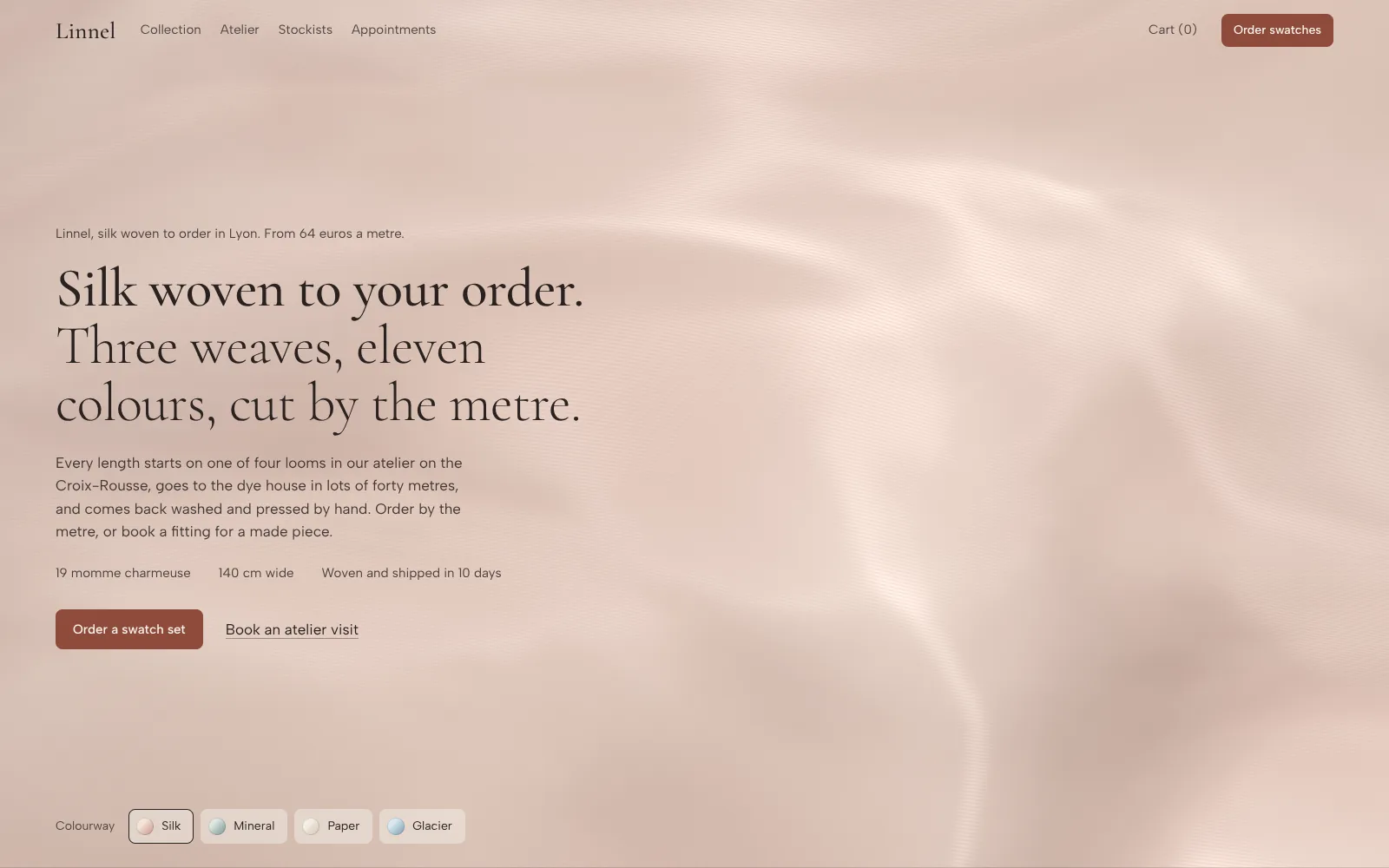
A silk gradient fills the first screen, a woven sheen follows your cursor, and the page slides over the cloth on scroll.
39 KB of text that builds one HTML file. Paste it into Claude Code, Cursor or v0 to rebuild this page.
A domain warped silk gradient fills the first screen of a textile house's page; a woven sheen follows the cursor on a spring, and the page slides over the cloth as you scroll.
Signature momentThe light pool at right of centre throwing long satin streaks along the drape, with the headline on the calm side of the cloth.
A 2 KB WebGL2 fragment shader: two smooth noise fields warp the domain, a third draws the folds at 2.3 times their frequency, and analytic derivatives carried through the warp give an exact surface normal with no extra taps.
Per pixel anisotropic lighting: a Kajiya-Kay lobe along the warp thread, a weaker one along the weft, a Blinn-Phong lobe on the fold crests, and a thread grain every 4 device pixels that modulates the highlight so the sheen carries the weave.
A point light 0.79 screen heights above the cloth follows the cursor on a spring (k 26, one soft overshoot, about 0.6 s to settle) and drifts on a 13 by 17 second path when nobody is pointing.
Silk, Oil, Dusk, Mineral, Paper, Ink, Brass, Glacier and Night: four light pages and five dark, each with its own four cloth colours, drape scale, relief, gloss and pool size. A colourway row in the hero switches between the looks of the current tone live.
The page slides over the pinned silk: eight CSS only fabric swatches with weights and prices per metre, the atelier with a satin weave diagram and an eight row specification table, five stockists and an appointment form.
Every look was measured behind each text block at 1440 by 900 and 390 by 844: small text keeps 4.5 to 1 or better against the cloth in all nine, with the light pool kept to the right of the copy on desktop and in the top band on phones.
DUSKLAYER.set()| Control | Key | Range | Default |
|---|---|---|---|
| Cloth colour 1 | color1 | color | #F3E4D8 |
| Cloth colour 2 | color2 | color | #E0BDB0 |
| Cloth colour 3 | color3 | color | #C49A8C |
| Cloth colour 4 | color4 | color | #F8F1E9 |
| Ink over the cloth | ink | color | #2A2220 |
| Accent (buttons, focus ring) | accent | color | #8F4B3C |
| Page below the hero | page | color | #F6F1EB |
| Domain warp | warp | 0 to 2.5 | 1.3 |
| Fold scale | scale | 0.5 to 3 | 1 |
| Fold depth | relief | 0 to 1 | 0.65 |
| Thread grain | weave | 0 to 1 | 0.5 |
| Sheen strength | sheen | 0 to 1 | 0.85 |
| Sheen sharpness | gloss | 0 to 1 | 0.68 |
| Light spread | spread | 0 to 1 | 0.6 |
| Idle flow speed | flow | 0 to 1 | 0.5 |
| Seed | seed | 1 to 9999 | 7 |
Something wrong with this layer? Report a problem and we fix it in the next version.
One text file, 39 KB, 10 sections. Every number the page uses is in it, so another model can rebuild the layer without seeing this one.
# Silk Mesh: build prompt

## Role
You are a senior creative front-end developer. Build the layer below as one self-contained `index.html`: the home page of {{BRAND_NAME}}, a small textile house in {{PLACE}} that weaves silk to order. The first screen is a length of silk rendered live in a 2 KB WebGL2 fragment shader: a domain warped mesh of four colours lit as woven cloth, with a per pixel anisotropic sheen along the warp and weft, long folds, a thread grain, and a light that follows the cursor on a spring and drifts slowly on its own. Real copy sits on the calm side of the cloth. The page below slides over the pinned silk and holds what a textile house publishes: a collection grid with CSS only swatches, the atelier and a specification table, stockists with an appointment form, a four group footer. Nine looks change cloth, page tone and light together; a colourway row switches between the looks of the same tone live. It must read as a real company's site, not a demo.

## Output contract
- One file `index.html` plus two small first-paint images in `assets/` (`pre.webp` 640 × 400 and `pre-m.webp` 300 × 650, text-free renders of the default look, about 3.5 KB each; if you cannot render them, leave the `<picture>` out and the CSS gradient does the job). No build step, no framework: plain HTML, CSS and one ES module. No libraries except Lenis.
- Import map with one exact version: `"lenis": "https://cdn.jsdelivr.net/npm/lenis@1.3.27/dist/lenis.mjs"`. Load it with `import('lenis')` after the shader starts (ignore failures), `new Lenis({ lerp: 0.1, smoothWheel: true, autoRaf: false })`, driven from the layer's own `requestAnimationFrame` loop with `lenis.raf(now)`. Not loaded under `?capture=1` or reduced motion.
- Fonts: one Google Fonts link after two preconnects, non-blocking (`media="print" onload="this.media='all'"`) with a `<noscript>` copy, `display=swap`: `Cormorant+Garamond:wght@300;400;500` and `Albert+Sans:wght@400;500`. Two metric matched local fallbacks so copy does not reflow when the web fonts land:

[36,974 more characters. Copy the prompt to get all of it.]Soft lights ringed in red halation drift over film grain. The key light eases toward your pointer and scrolling cools the palette.
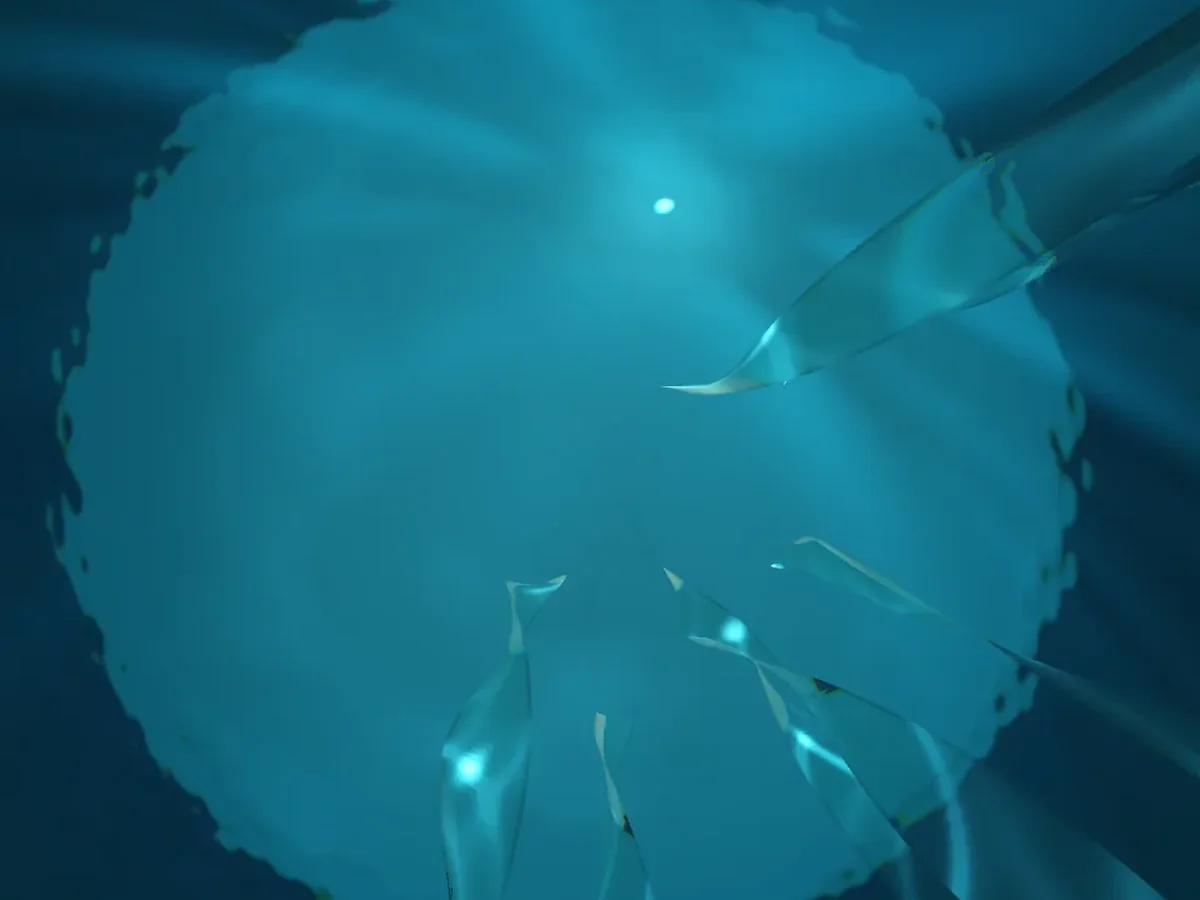
An underwater scene that rises through the surface as you scroll.
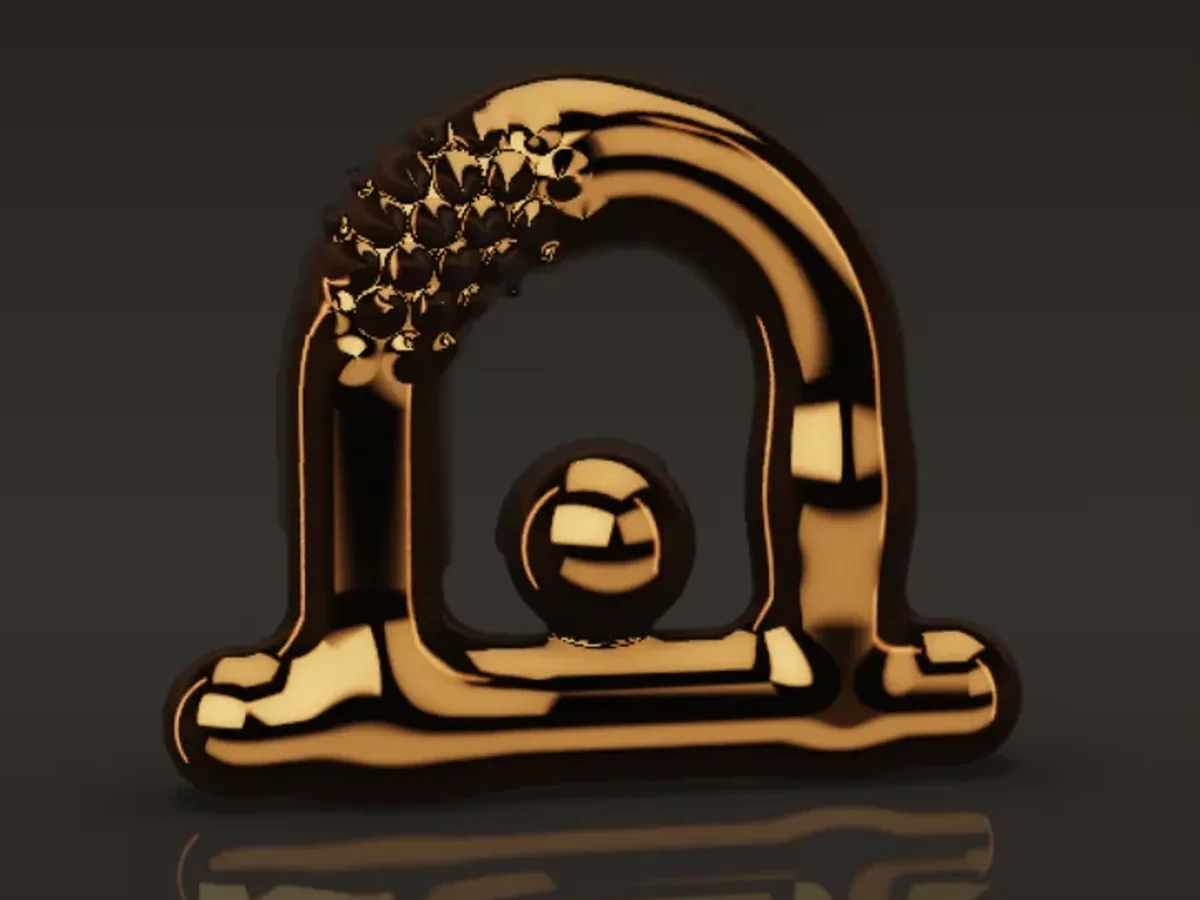
A full finance site on a strict twelve column grid. A bronze arch rises from liquid metal and bristles near your pointer.